

You know the feeling: the plow rumbles by at 5 a.m. and leaves a dense, icy wall of snow across the end of your driveway. Your trusty shovel just bounces off it, and a gas blower feels like overkill for the rest of your short driveway. What you need is a cordless snow blower that can power through that frozen berm without dragging a cord or mixing fuel.
This guide focuses specifically on battery-powered snow blowers that can handle end-of-driveway plow piles. We evaluated over a dozen models for auger strength, throwing distance, battery capacity, and overall build quality. Whether you have a single-car apron or a wide double-wide driveway, there is a cordless option here that will save your back this winter. For smaller setups, you might also want to check our guide to the best cordless snow blowers for small driveways.


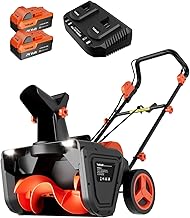


Buying Guide: What to Look for in a Cordless Snow Blower for Plow Piles
Plow piles are not the same as fresh powder. They are dense, often icy, and can be several feet high. To bust through them, you need a machine with specific features. Here are the four most important things we looked at during our evaluation.
Auger Design and Material
The auger is the first thing that touches the pile. A plastic auger can chip or crack when it hits ice, so a steel auger is a must for plow piles. Look for serrated or curved steel blades that can bite into hard-packed snow and break it apart before it reaches the impeller.
Dual-stage models, like the EGO Power+ 24″ Electric Snow Blower, use a steel auger plus a separate impeller to chew up the snow and shoot it out. Single-stage blowers with a steel auger, such as the EGO Power+ 21-Inch Steel Auger model, can still handle moderate piles, but they rely more on throwing power than on grinding action.
Throwing Distance and Chute Control
When you are attacking a plow pile at the end of a driveway, you want to toss that snow far into the yard, not back onto the street. A throwing distance of at least 30 feet gives you enough clearance. The WORX Brushless Motor model with its 20″ clearing width and 35-foot throw is a great example of high-velocity output.
Equally important is chute control. A 180-degree or 200-degree rotating chute lets you aim the snow exactly where you want it. Some models also offer remote or joystick chute adjustment, which is handy when you are repositioning the blower around a tight apron. Check out our roundup of the best cordless snow blowers for paver driveways for more detail on chute precision.
Battery Capacity and Runtime
Plow piles are dense, and dense snow drains batteries faster than light fluff. Look for models that come with two batteries or a high amp-hour rating. The SENIX 1800W Brushless Motor model includes a 10000mAh pack, which gives it extended runtime for bigger jobs. Dual-battery setups, like the EWORK 40V with two 4.0Ah batteries, also help you swap packs without stopping.
Cold weather can reduce battery performance, so consider how the blower manages that. Many modern units use brushless motors that are more efficient in low temperatures. If you live in a region with extreme cold, our article on the best cordless snow blowers for extreme cold can help you choose a model that keeps running when the mercury drops.
Clearing Width and Intake Depth
Clearing width determines how many passes you need to make, and intake depth determines how much snow you can swallow in one go. A 20-inch clearing width is the sweet spot for most residential driveways. For deeper piles, look for an intake depth of at least 10 inches. The ETOOLAB 40V model has a 12-inch intake depth, which makes it a strong candidate for thick plow ridges.
But wider is not always better for plow piles. Sometimes a narrower blower with a deeper intake can power through a dense berm more effectively, because the auger does not have to process as wide a swath of ice at once. If you have a large driveway, you may want to read about the best cordless snow blowers for a 3-car driveway to balance speed and power.
Final Thoughts
Choosing the right cordless snow blower for plow piles comes down to matching the machine to the mess. For homeowners who face dense, wet, plow-packed snow every storm, the EGO Power+ 24″ Electric Snow Blower delivers the dual-stage power and steel auger you need to chew through the hardest piles. If you prefer a lighter, more maneuverable single-stage that still has serious bite, the EGO Power+ 21″ Electric Snow Blower, Gray/Black is a proven workhorse that pairs well with a 2-stage unit for the toughest days. Whichever you choose, you will save your back and cut your clearing time way down.
Frequently Asked Questions
Can a cordless snow blower handle a plow pile at the end of a driveway?
Yes, but only if you choose a model with a steel auger and enough throwing power. Single-stage cordless blowers can handle piles up to about 10 inches deep, while dual-stage models like the EGO Power+ 24″ can chew through much larger, ice-crusted berms.
How far should a cordless snow blower throw snow to clear plow piles?
You want at least 30 feet of throwing distance for plow piles, so the snow lands well past the edge of your yard. Models like the WORX Brushless Motor blower, which throws up to 35 feet, give you plenty of margin for heavy, wet snow.
What is the best battery voltage for a cordless snow blower?
In 2026, 40V to 56V systems offer the best balance of power and runtime for plow piles. Higher voltage systems like the 56V EGO line deliver more torque, but they are also heavier and more expensive. A 40V model with a brushless motor is often enough for moderate piles.
Should I get a single-stage or dual-stage cordless snow blower for plow piles?
If your plow pile is more than 12 inches high or contains ice chunks, a dual-stage model is the safer bet. If you only deal with occasional shallow piles, a single-stage with a steel auger can work. Beginners may want to start with a lighter single-stage and see our best cordless snow blowers for beginners guide for more tips.


Write Your Review
No reviews yet. Be the first to share your experience!