

If you manage a property with mature trees, fallen branches, and brush piles, you know the struggle of debris buildup. Renting a chipper gets expensive fast, and hauling brush to the dump wastes entire weekends. That is why we put together this guide to the best wood chipper for serious homeowners, homesteaders, and light commercial operators in 2026. We evaluated 16 models across power, feed capacity, portability, and build quality to help you pick the right machine. If you are also shopping for a mower, our zero turn mower buying guide can help you pair your chipper with a capable cutting deck.


What to Look for in a Heavy-Duty Wood Chipper
Choosing the right chipper involves more than matching horsepower to branch diameter. You need a machine that starts reliably, handles the wood you actually cut, and stays stable on rough ground. We considered all of these factors when evaluating the models in this guide.
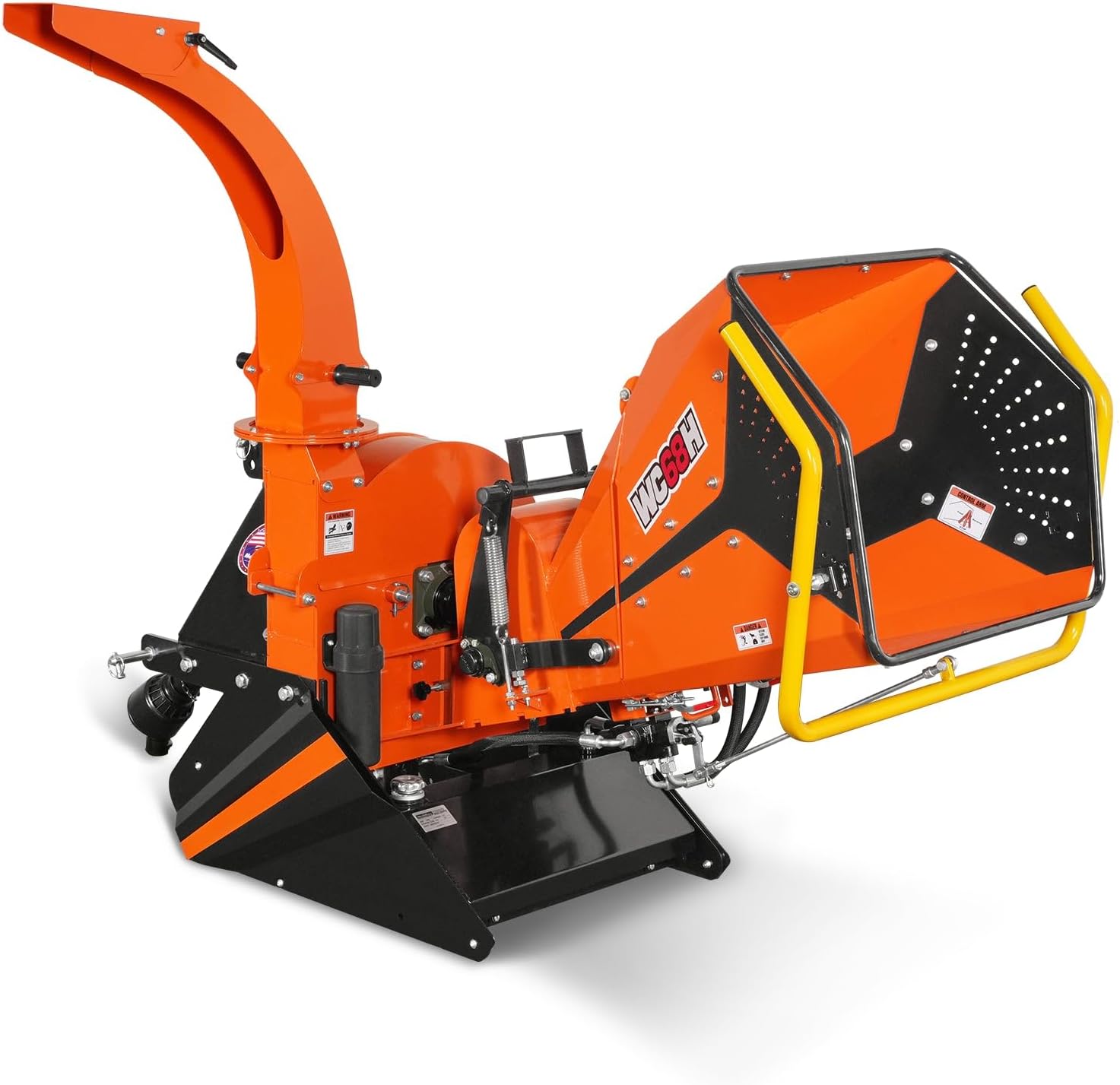
Some of the best machines in this class are gas-powered and self-contained, while others attach to your tractor’s PTO. The PTO Tractor Driven 3 Point BX62S Wood Chipper taps into your tractor’s hydraulics, which can be ideal if you already own a compact utility tractor. For everyone else, a self-powered gas unit like the MechMaxx or BILT HARD models offers true independence.
Engine Power and Displacement
The engine is the heart of any chipper. It powers the rotor that grabs and shreds branches, and it determines how fast you clear a brush pile. For heavy residential use, look for models with electric start and high torque output. The BILT HARD 8 Inch Gas Powered Wood Chipper uses a 999cc engine, while the MechMaxx 8 Inch ZONSEN pushes even closer to 1000cc. A larger displacement usually means easier processing of dense oak or hickory. You will also appreciate electric start when the weather turns cold or the battery in your tow vehicle is already drained. If you are curious how engine differences play out across outdoor equipment, our Kawasaki vs Kohler mower engine comparison covers similar considerations.
Electric start is not just a convenience; it saves time on cold mornings and reduces wear from pull-starting. If you are an older operator or simply want low-stress operation, prioritize a model with a dedicated starter button.
Feed Capacity and Chipper Design
The feed capacity tells you the maximum branch diameter the chipper will accept. Six-inch models like the FORESTWEST 11062 and the MechMaxx 6 inch Kohler are the sweet spot for most acreage owners. Eight-inch machines, such as the BILT HARD and MechMaxx 8 Inch, are for those who regularly drop larger trees. Self-feeding designs, including the 7” Self Feeding Wood Chipper, FH-BX62S, can pull material in automatically, reducing the physical effort of pushing every limb through the chute. That feature is a game changer if you process dozens of branches in a single session. The tradeoff is usually a heavier frame and a more substantial investment, though you may find the convenience worth it.
Pay attention to the rotor design as well. Some chippers use a single heavy flywheel, while others rely on a two-blade disc. A self-feeding system with hydraulic assist, as seen on some commercial units, can drag entire branches in without you touching the wood.
Portability and Towability
Many heavy chippers come on four-wheel trailers that attach to a pickup or tractor. Look for a tow bar, working tail light, and tires rated for road speeds. The DK2 6 in 14 HP Kinetic model offers a compact, road-ready package, while the MechMaxx units combine tow bars with emergency stop bars. Before you commit, check that your tow vehicle has the right hitch class. Also consider storage space; a chipper with a long tongue can be awkward in a tight garage. Navigating narrow property entrances matters too, and our side-by-side of 48 vs 54 inch zero turn mower gives a good sense of width tradeoffs.
Consider the tongue weight and whether the chipper includes a jack stand. The BILT HARD 8 Inch includes a tow bar and tail light, which makes moving between properties much simpler. A swiveling jack wheel helps when you park on uneven ground.
Build Quality and Safety Features
A chipper works at high rotor speeds, so build quality and safety features are critical. Reinforced steel housings, safety chutes, and emergency stop controls should be on your checklist. The MechMaxx 6 inch Kohler and the PTO Tractor Driven 3 Point BX62S both emphasize stop mechanisms and sturdy construction. The same way a flimsy mower deck can bend under pressure, a weak chipper housing can fail in the middle of a job. Look for welded frames rather than bolted assemblies, and check that the tires are mounted on solid rims. Our comparison of fabricated vs stamped mower deck explains why structural durability matters on the properties we manage.
Check the thickness of the steel around the inlet and the rotor housing. Thinner metal can vibrate and crack over time. The Self Powered Diesel Wood Chipper Machine Hydraulic is an example of a heavy industrial-style build, though it may be more than a homeowner needs.
Final Thoughts
If you need maximum throughput for large branches and want an efficient work pace, the MechMaxx 8” Inch ZONSEN 1000cc 35hp Electric delivers the kind of power and towability that suits heavy residential use. For those who prefer a self-feeding design and do not want to wrestle every limb into the rotor, the 7” Self Feeding Wood Chipper, FH-BX62S is a standout. Either way, your property will look cleaner and your brush pile will shrink faster than you expect.
Frequently Asked Questions
What size wood chipper do I need for a large yard?
For most large residential properties, a 6 inch capacity chipper is enough. If you regularly process limbs thicker than your wrist, an 8 inch model gives you more headroom and fewer jams. Consider the diameter of the wood you cut most often and match the intake opening accordingly. If you are also working through mower deck sizes, our 42 vs 48 inch zero turn mower can help you plan property access.
How important is engine horsepower in a wood chipper?
Horsepower and displacement drive the rotor torque that pulls branches through the chipper. Bigger engines, such as the 35hp unit on the MechMaxx 8 Inch, handle dense wood more effectively. A higher power rating also reduces the chance of stalling on thick or damp material. As a rule of thumb, choose at least 14hp for 6 inch models and 25hp or more for 8 inch units. That said, a well-designed rotor and sharp blades can make a smaller engine feel surprisingly capable.
Can a wood chipper handle green branches and wet wood?
Yes, but you should expect slower processing and more frequent blade maintenance. Wet wood is heavier and can put extra stress on the rotor and belts. Many of the models we reviewed, including those with 14hp or larger engines, manage green wood well when you feed them a little slower. Let fresh cuts dry for a few days if you want to extend blade life.
What safety features should I look for in a wood chipper?
Look for an emergency stop bar, emergency stop button, and a feed chute that prevents kickback. Some towable models also include tail lights and braking systems for safe road travel. A chipper is a powerful machine, so choose one with clear shields and sturdy guarding around the rotor. Never reach into the chute while the rotor is spinning, and always wait for the blades to come to a full stop before clearing a jam. If you have children or pets, a locking ignition switch is another thoughtful feature.


Write Your Review
No reviews yet. Be the first to share your experience!