

Your driveway has taken a beating through the weather, your car’s paint is sticky with sap, and the patio furniture looks more gray than green. A quality pressure washer can solve all of that in an afternoon. In this guide, we compare the top pressure washers for homeowners in 2026, covering gas and electric models that deliver professional-level cleaning without overwhelming your storage space. Whether you need a light-duty unit for car washes or a heavy-duty machine for concrete and siding, there is a perfect option here for you.
Choosing the right pressure washer is a lot like comparing zero turn mower deck sizes: you need to match the tool to the task. A compact electric washer works well for routine car care and small patios, while a high-volume gas model shines on large driveways and barn walls. We evaluated each machine for power output, build quality, portability, and ease of use. For a deeper look at our full lineup, visit our pressure washer category.
Below you will find a comparison table of the top contenders. Use it to spot the key differences at a glance, then read on for our buying advice and detailed recommendations.

Pros
- Exceptional cleaning power for an electric model, rivaling some gas units
- Durable brushless motor with auto-stop pump extends product lifespan
- Wide range of nozzles and soap tank offer flexibility for various surfaces
- Easy to move around on large wheels and long hose/cord
- Highly rated by customers for reliability and performance
Cons
- At 25 feet, the hose may be shorter than some competitors
- Electric cord requires a nearby outlet; not ideal for remote areas
- Relatively heavy unit may be cumbersome for smaller users
The Westinghouse WPX3400e is a powerful electric pressure washer designed for homeowners who need serious cleaning capability without the fumes of gas models. With 3400 max PSI and 2.0 GPM, it stands out among electric units, easily handling driveways, fences, siding, and patio furniture.
Its standout feature is the maintenance-free brushless motor and axial cam pump, which delivers consistent pressure and long life. The five quick-connect nozzles and onboard soap tank allow you to adjust from gentle washing to high-pressure stripping effortlessly. Real-world performance is excellent, with users reporting effective removal of mildew, dirt, and grime.
Build quality is robust, with a steel frame, 10-inch never-flat wheels, and a 35-foot GFCI cord for good reach. The 25-foot abrasion-resistant hose is flexible and durable. However, the hose length may limit some large projects without extension, and the unit is somewhat heavy to lift.
Potential drawbacks include reliance on an electrical outlet, which can be inconvenient for large properties. Also, the included wand may be a bit short for very high areas. But overall, the WPX3400e offers exceptional value for its power level.
Verdict: For homeowners seeking a reliable, high-performance electric pressure washer with minimal maintenance, the Westinghouse WPX3400e is a top choice. Its combination of power, versatility, and warranty makes it a smart investment.
Brand: Westinghouse
Model: WPX3400e
Maximum Pressure: 3400 PSI (max), 3000 PSI (rated)
Maximum Flow Rate: 2.0 GPM (max at lowest pressure), 1.1 GPM (rated)
Motor: Heavy duty AC 120V true brushless electric
Pump: Maintenance-free axial 3 piston auto-stop
Hose Length: 25 feet
Power Cord Length: 35 feet GFCI
Soap Tank Capacity: 0.45 gallons
Nozzles: 5 included (0°, 15°, 25°, soap, turbo) with quick connect
Dimensions: 25.9 x 19.3 x 37.4 inches
Weight: Not specified but heavy duty
Warranty: 3-year limited manufacturer





How to Choose a Pressure Washer
Before you buy, think about the surfaces you clean most, how often you use the machine, and where you will store it. The right pressure washer balances power with practicality. Here are the four most important factors to consider.
PSI and GPM: The Power Pair
PSI, or pounds per square inch, tells you how hard the water hits the surface. GPM, gallons per minute, tells you how much water flows. Both matter equally. A high PSI with low GPM can feel aggressive but slow; a balanced pair cleans faster and more evenly.
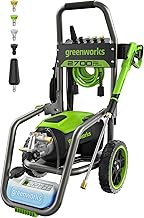
For most home jobs, 2000 to 3000 PSI and 2.0 GPM is plenty. The 4200PSI Gas Pressure Washer 4.0GPM Gas Power sits at the top end, while the Greenworks 2700 PSI (2.3 GPM Max) offers a practical middle ground. Consider your main surfaces before choosing. A higher PSI is useful for concrete and brick, but too much pressure can damage wood siding or vehicle paint.
Gas vs Electric: Where Will You Use It?
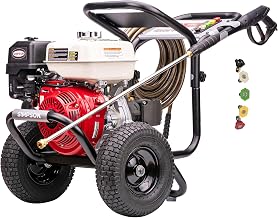
Gas pressure washers are portable, powerful, and ideal for large driveways and farm use. The Simpson Clean Machine series, such as the Gas Power Washer For Homeowners. Axial Cam Pump, is a staple for good reason. These machines require more maintenance and make more noise, but they cut through tough grime quickly and are not tied to a power outlet.
Electric models are quieter, lighter, and start with a simple pull of a switch. The Westinghouse WPX3400e Electric Pressure Washer is a great example, and the EGO Power+ Electric Pressure Washer goes even further with battery power. If your work area is close to a power outlet and you prefer low maintenance, electric is the way to go. For remote jobs, a gas model gives you total freedom.
Pump Quality and Warranty
The pump is the heart of any pressure washer. Axial cam pumps are common and affordable; AAA axial cam pumps are more durable and often used on higher-end residential models. The DeWalt gas pressure washer with its AAA axial cam pump is built to last. For homeowners who plan to use the washer frequently, investing in a better pump pays off in the long run.
Copper pumps, like the one on the Gas Pressure Washer 4200 PSI Gas Power Washer 4.0, resist corrosion and stay cool under heavy use. Before you buy, check the warranty length and whether parts are easy to source. This is often where budget models fall short. A solid warranty can save you money and stress years down the road.
Hose, Nozzles, and Extra Accessories
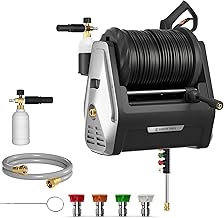
A 25-foot hose is standard, but longer hoses save you from moving the unit constantly. Quick-connect nozzles let you switch spray patterns without tools, and a soap tank or foam cannon simplifies car washing. The Max 2900 PSI, Max 2.2 GPM Electric Power Washer from Giraffe Tools includes a retractable hose and foam cannon for a tidy setup.
If you clean large driveways or walkways, a surface cleaner attachment can dramatically speed up the job. The Simpson CM61248-S comes with a 15-inch surface cleaner, making it a standout for patio and sidewalk maintenance. Consider whether the included accessories match your typical projects. Upgrading later can be costly, so it pays to get a complete kit upfront.
Still weighing your options? Browse our property equipment guides for more tips on maintaining your yard and home. And if you are also shopping for a mower, our zero turn mower selection guide walks through the decision process step by step.
Final Thoughts
Choosing the right pressure washer comes down to how you plan to use it. For most homeowners, the Westinghouse WPX3400e Electric Pressure Washer offers a strong combination of convenience and cleaning power, while the Gas Power Washer For Homeowners. Axial Cam Pump from Simpson brings serious muscle for large driveways and frequent heavy-duty jobs. Whichever you pick, pair it with proper technique and a quality nozzle, and you will see the difference in no time.
Frequently Asked Questions
Do I need a gas or electric pressure washer for home use?
Electric models are quieter and easier to maintain, making them great for small driveways, patios, and car washes. Gas models are better for large areas and tough stains because they deliver higher PSI and GPM. In 2026, many electric options have closed the gap, so think about your typical cleaning tasks first. If you primarily clean around the house and have an outlet nearby, an electric unit will serve you well.
What PSI do I need to clean a driveway?
For concrete driveways, 2700 to 3400 PSI is usually enough to remove grime and mildew. The Greenworks 2700 PSI (2.3 GPM Max) is a solid choice, and models like the Simpson 3400 PSI gas washer offer extra headroom for stubborn oil stains. Always use the right nozzle to avoid etching the surface. Start with a wider spray pattern and narrow it down until you see the desired cleaning effect.
Can I use a pressure washer to wash my car?
Yes, but use a lower-pressure nozzle and keep the wand moving. The DIY Automotive Car Care. Paint-Safe model is specifically designed for car detailing. It delivers a gentle yet effective spray that is safe for paint and clear coats. Pair it with a foam cannon for a thick, protective suds layer, and avoid using a the narrowest nozzle at close range.
How do I maintain my pressure washer for a long lifespan?
Run clean water through the unit after each use, especially if you have hard water. For gas models, use fuel stabilizer and check the oil regularly. Electric and battery models like the EGO Power+ Electric Pressure Washer require minimal upkeep, just keep the intake filter clear. If you are also planning your lawn care routine, our zero turn mower buying guide can help you round out your equipment list.




Write Your Review
No reviews yet. Be the first to share your experience!