

The morning sun reveals what the weekend hid: oil stains on the driveway, mildew creeping across the patio, and a layer of grime on the siding that is no longer a “lived-in” look. A gas pressure washer is the only tool powerful enough to strip that buildup fast, without dragging around extension cords or waiting for electric motors to catch up. In this guide, we reviewed the best gas pressure washer models available in 2026, focusing on cleaning power, pump quality, ease of use, and long-term reliability.
Whether you need a compact machine for home maintenance or a high-output unit for a small business, this roundup has you covered. We evaluated each gas power washer side by side, and we also compared features like hose length, nozzle sets, and soap tanks to match real-world cleaning scenarios. If you are building out your outdoor equipment arsenal, check out our pressure washer category for more resources. And if you are also looking to upgrade your lawn care setup, our zero turn mower buying guide will help you choose the right deck size.
Here is our quick comparison table of the top gas pressure washers we assessed for 2026:


Gas Pressure Washer Buying Guide: What Matters Most
Before you choose the best gas pressure washer for your property, you need to understand four core specs. Each one changes the machine’s cleaning speed, durability, and ease of daily use.
1. Pressure (PSI) and Water Flow (GPM)
PSI tells you how hard the water hits the surface, while GPM tells you how fast the water flows. Both numbers determine how quickly you finish a job. For most driveways and house washing, 3200 to 3500 PSI with 2.5 to 2.6 GPM is the sweet spot. For larger commercial projects, 4.0 GPM units like the 4200PSI Gas Pressure Washer 4.0GPM Gas Power and the 4200PSI Gas Pressure Washer 4.0GPM Gas Power cut heavy cleaning time in half.
High GPM also helps with detergent application. More water means soap spreads faster and rinses more completely. If you are cleaning large patios or fleet vehicles, prioritize GPM just as much as PSI.
2. Pump Type: Axial vs. Triplex
The pump is the heart of any gas pressure washer. Axial pumps are compact, lightweight, and common in residential models. They work well for intermittent duty. Triplex pumps use three plungers and are built for more consistent, long-running use. If you wash multiple properties or plan to run the machine for hours, a triplex pump is worth the investment.
Many top-rated machines in this roundup use axial pumps with quality internals, like the Gas Power Washer For Homeowners. Axial Cam Pump. That design is proven and easy to maintain, provided you winterize and check pump oil regularly.
3. Engine Power and Ease of Starting
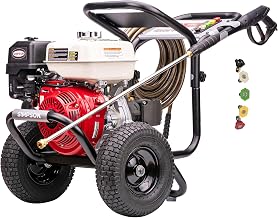
A dependable engine makes the difference between a pressure washer that starts on the first pull and one that spends its life in the shed. Brands like Honda, Briggs & Stratton, and Westinghouse have strong track records. The SIMPSON Cleaning PS3228 PowerShot 3300 PSI Gas pairs a Honda GX200 engine with a proven pump design, making it a favorite among homeowners and pros alike.
The same engine maintenance principles apply to other outdoor equipment. We break down engine brand differences in our comparison of Kawasaki vs. Kohler mower engines, which can help you choose equipment across your property.
4. Nozzle Selection, Hose Length, and Portability
Quick-connect nozzles let you switch from a wide 25-degree spray to an aggressive 0-degree jet in seconds. A turbo nozzle adds rotational force for stubborn stains. Most gas pressure washers come with five color coded nozzles, but check whether a soap nozzle is included. A built-in soap tank is another convenience you will appreciate.
Hose length affects reach. A 25-foot hose, like the one on the 4200 PSI Gas Pressure Washer, gives you solid range without constantly moving the cart. Large wheels and a sturdy frame make transport easier over grass and gravel. If you are planning a full lawn and garden setup, our guide to fabricated vs. stamped mower decks covers another important durability decision. For mowing efficiency, you can also read our comparison of 48 vs 54 inch zero turn mower.
We also considered safety features and compliance. Look for EPA and CARB certification, as many states restrict emissions. The 4200 PSI 4.0 GPM Gas Pressure Washer is one model that checks those boxes while delivering commercial-level output.
Final Thoughts
Choosing the best gas pressure washer comes down to matching the machine to the work you do most often. For homeowners who want a proven, reliable all-rounder, the Westinghouse WPX3400 Gas Pressure Washer is a superb pick with a strong balance of pressure, flow, and ease of use. If your jobs are larger and you need maximum speed, the 4200PSI Gas Pressure Washer 4.0GPM Gas Power delivers the kind of 4.0 GPM output that turns a weekend project into a quick task.
Frequently Asked Questions
How many PSI do I need in a gas pressure washer?
For most residential cleaning jobs, 3000 to 3500 PSI is enough to remove dirt, mildew, and light stains from concrete. If you plan to clean oil stains, heavy equipment, or large commercial surfaces, a 4200 PSI unit with 4.0 GPM will deliver much faster results. The right choice depends on the type and frequency of your cleaning tasks.
Is a gas pressure washer better than an electric one?
Gas pressure washers offer far higher pressure and flow rates than electric models, which makes them ideal for driveways, siding, and large patios. They are also fully portable since you do not need a power outlet. The tradeoff is more noise, maintenance, and emissions, but for heavy-duty cleaning in 2026, gas remains the preferred choice for many pros. If you want to explore more outdoor power options, our property equipment hub is a great starting point.
What maintenance does a gas pressure washer need?
You should check the engine oil, pump oil, and air filter before each season of heavy use. Run clean water through the system after each job to prevent debris buildup. In colder climates, winterize the pump with antifreeze to keep the internal seals from cracking. If you plan to store it for months, drain the fuel and use a fuel stabilizer.
Can I use a gas pressure washer to clean my car?
Yes, but you need to use a low-pressure nozzle and keep the spray tip at least a foot away from the paint. Choose a wider nozzle pattern and avoid direct high-pressure blasts on trim and mirrors. Many gas pressure washers include a soap nozzle that makes car washing easier, and you can pair it with a foam cannon for extra safety.




Write Your Review
No reviews yet. Be the first to share your experience!