

Your driveway is caked with grime, the patio furniture looks neglected, and the car hasn’t seen a proper wash in months. You need a gas pressure washer that can blast away dirt without costing a fortune. In this guide, we’ve evaluated the most popular models that deliver exceptional cleaning power while staying within a reasonable budget. Whether you’re a homeowner tackling seasonal chores or a DIY enthusiast, we’ll help you find the right machine for your needs. For more on pressure washer basics, check out our Pressure Washers category.




Pros
- High pressure and flow rate suitable for most residential cleaning tasks.
- Induction motor is quieter and more durable than universal motors.
- Included five-nozzle set covers a wide range of applications.
- Large wheels and long cord provide excellent maneuverability.
- Backed by 3-year limited warranty.
Cons
- Electric washer may have lower PSI than gas models for extreme jobs.
- Soap tank capacity (0.45 gal) may require refills for large areas.
- Some users report hose stiffness in cold weather.
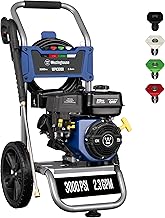
The Westinghouse WPX3000e is an electric pressure washer designed for homeowners who need reliable cleaning power for driveways, fences, decks, cars, and patio furniture. With 3000 max PSI and 1.76 GPM, it tackles medium to heavy grime without the maintenance of gas models.
Its induction motor runs quieter and lasts longer than traditional universal motors, while the axial cam pump is maintenance free. The five quick-connect nozzles let you switch from a gentle soap spray to a high-pressure 0-degree jet for stubborn stains. The onboard 0.45-gallon soap tank simplifies detergent application.
The rugged steel frame and 10-inch never-flat wheels make this pressure washer easy to roll over rough terrain. The 35-foot GFCI cord and 25-foot hose provide ample reach around an average driveway. The unit is weighty at 36.8 pounds but balanced for stable operation.
One potential drawback is the soap tank capacity, which may require refills for large areas. The electric motor limits pressure compared to gas models, but for most residential jobs it is adequate. Some users note the hose can be stiff in cold weather.
Overall, the Westinghouse WPX3000e offers excellent value with strong cleaning performance, thoughtful features, and a solid warranty. It is a great choice for homeowners who want a dependable electric pressure washer for seasonal cleaning projects.

Buying Guide
Choosing the right gas pressure washer involves balancing several key factors. Here are the most important criteria to consider before making your purchase.
PSI and GPM: The Power Duo
PSI (pounds per square inch) measures pressure, while GPM (gallons per minute) measures water flow. Together, they determine cleaning efficiency. For heavy-duty tasks like stripping paint or cleaning concrete, look for at least 3000 PSI and 2.5 GPM. Many models in this range offer 4200 PSI and 4.0 GPM, which is overkill for light jobs but perfect for stubborn stains. However, higher numbers aren’t always better for delicate surfaces like wood or car paint, so adjustable nozzles are essential.
Engine and Pump Quality
The engine is the heart of a gas pressure washer. Most budget-friendly models use 212cc engines, which provide reliable power for residential use. Look for axial cam pumps, which are common and durable for intermittent use. Some models feature AAA axial cam pumps for longer life. EPA and CARB compliance is also important if you live in a state with emission regulations. A solid engine and pump combo ensures you get years of service without premature wear.
Portability and Hose Length
A pressure washer that’s hard to move becomes a chore. Check for pneumatic tires (air-filled) that roll smoothly over rough terrain. A 25-foot hose is standard, but longer hoses reduce the need to move the machine frequently. Some models include a hose reel for easy storage. Also consider the weight: a unit that’s too heavy can be a hassle to maneuver around your property. For more tips on maintaining outdoor equipment, visit our Property Equipment page.
Nozzle Set and Foam Cannon
Most gas pressure washers come with a set of quick-connect nozzles (0°, 15°, 25°, 40°, and soap). These allow you to adjust the spray pattern for different tasks: from high-pressure stripping to gentle rinsing. A foam cannon or onboard soap tank is a huge plus for car washing or applying detergent. Models with a 1000ml foam bottle give you more cleaning power without constant refills. Make sure the included accessories match your typical cleaning needs.
Final Thoughts
After reviewing the top contenders, we believe the 4200PSI Gas Pressure Washer 4.0GPM Gas Power stands out for its outstanding pressure and flow, making it ideal for heavy-duty jobs like driveways and decks. If you prefer a trusted brand with solid performance and reliability, the Westinghouse WPX3000 Gas Pressure Washer is a fantastic choice that won’t disappoint. Both machines deliver excellent value and will keep your property looking its best.
Frequently Asked Questions
What PSI do I need for a gas pressure washer?
For most residential tasks like cleaning driveways, patios, and cars, a pressure washer with 3000 to 3500 PSI is sufficient. If you plan to strip paint or clean concrete stains, consider models with 4000+ PSI. Always match the pressure to the surface to avoid damage.
Is 4.0 GPM too much for home use?
Not necessarily. A higher GPM means faster cleaning because more water flows per minute. For heavy-duty jobs, 4.0 GPM is excellent. However, it can waste water on light tasks, so use the appropriate nozzle to control flow. Many homeowners find 2.5 to 3.0 GPM a good balance.
How often should I service a gas pressure washer?
Regular maintenance extends the life of your machine. Change the oil every 50 hours of use or once a season, whichever comes first. Check the air filter and spark plug annually. Also, flush the pump with antifreeze if storing for winter. Following the manual ensures reliable performance for years. For more tips, see our Pressure Washers guide.
Can I use a gas pressure washer to wash my car?
Yes, but with caution. Use a wide-angle nozzle (40°) and keep the wand moving to avoid damaging the paint. A foam cannon with car-specific soap helps lift dirt gently. Avoid high-pressure settings on delicate surfaces. Many gas pressure washers come with a soap nozzle for this purpose.




Write Your Review
No reviews yet. Be the first to share your experience!