

You have a fleet of work trucks caked in mud, a sprawling concrete pad stained with oil, or a rental property with years of grime buildup. A residential pressure washer just won’t cut it. You need a machine that delivers sustained high pressure, reliable flow, and the durability to run for hours without overheating. That is where a commercial pressure washer becomes an essential investment. In this guide, we evaluate the best commercial pressure washers of 2026 across gas and electric categories, so you can choose the right one for your business or property.
Our team has assessed dozens of models, focusing on PSI and GPM ratings, pump construction, engine reliability, and overall build quality. Whether you need a portable electric unit for light commercial tasks or a gas-powered beast for continuous heavy-duty cleaning, we have you covered. For more on maintaining your equipment, check out our Pressure Washers category.




Pros
- Powerful cleaning performance with 2500 max PSI and 1.76 GPM
- Compact and portable design at only 19 pounds and 16.5 inches tall
- Stable anti-tipping design with four-wheel steering for easy maneuverability
- Includes five nozzles and onboard soap tank for versatile cleaning tasks
- Backed by a 3 year limited warranty and nationwide customer support
Cons
- Corded electric design requires a nearby outlet, limiting portability compared to gas models
- Rated PSI is 2000, lower than the maximum 2500 PSI advertised at lowest pressure
- 20 ounce soap tank may need frequent refills for larger cleaning jobs
The Westinghouse ePX3500 electric pressure washer is a compact yet powerful cleaning tool designed for homeowners who need to tackle tough grime on driveways, patios, fences, cars, and more. With 2500 max PSI and 1.76 max GPM (at lowest pressure), it provides enough force to blast away mildew, grease, oil, mud, and rust from a variety of surfaces.
Standout features include the anti-tipping technology with a low center of gravity and four-wheel steering, which makes the unit remarkably stable and easy to maneuver around obstacles. The 25 foot easy-coil hose and pro-style steel wand with five quick-connect nozzles (0, 15, 25, turbo, and soap applicator) offer versatility for different cleaning tasks. The onboard 20 ounce soap tank allows for convenient detergent application without needing a separate bucket.
Design and build quality are impressive for the price. The unit is lightweight at 19 pounds and compact at 16.5 inches tall, making storage simple. The four quick-lock wheels provide 360 degree turning, so the washer follows you smoothly from driveway to grass. The Total Stop System automatically shuts off the pump when the trigger is not engaged, conserving energy and extending pump life.
Some drawbacks to consider: the electric cord limits range to the nearest outlet, and the maximum PSI is achieved only at the lowest pressure setting (rated output is 2000 PSI). The soap tank is small at 20 ounces, which may require refills for large areas. However, these are minor trade offs for the convenience and power this unit offers.
Overall, the Westinghouse ePX3500 is an excellent choice for homeowners seeking a reliable, easy to use electric pressure washer. Its combination of power, portability, and thoughtful features like anti-tipping and a long hose make it a top performer in its category. Backed by a 3 year warranty, it delivers great value for everyday cleaning needs.
Brand: Westinghouse
Model: ePX3500
Max Pressure: 2500 PSI (at lowest pressure)
Rated Pressure: 2000 PSI
Max Flow Rate: 1.76 GPM (at lowest pressure)
Rated Flow Rate: 1.2 GPM
Power Source: AC (corded electric)
Hose Length: 25 feet
Soap Tank Volume: 20 fluid ounces
Weight: 19 pounds
Dimensions: 13.5 x 14 x 16.5 inches
Warranty: 3 Year Limited
Included: Pro-style steel wand, 5 nozzles (0, 15, 25, turbo, soap), hose


Pros
- High pressure and flow rate suitable for most residential cleaning tasks.
- Induction motor is quieter and more durable than universal motors.
- Included five-nozzle set covers a wide range of applications.
- Large wheels and long cord provide excellent maneuverability.
- Backed by 3-year limited warranty.
Cons
- Electric washer may have lower PSI than gas models for extreme jobs.
- Soap tank capacity (0.45 gal) may require refills for large areas.
- Some users report hose stiffness in cold weather.
The Westinghouse WPX3000e is an electric pressure washer designed for homeowners who need reliable cleaning power for driveways, fences, decks, cars, and patio furniture. With 3000 max PSI and 1.76 GPM, it tackles medium to heavy grime without the maintenance of gas models.
Its induction motor runs quieter and lasts longer than traditional universal motors, while the axial cam pump is maintenance free. The five quick-connect nozzles let you switch from a gentle soap spray to a high-pressure 0-degree jet for stubborn stains. The onboard 0.45-gallon soap tank simplifies detergent application.
The rugged steel frame and 10-inch never-flat wheels make this pressure washer easy to roll over rough terrain. The 35-foot GFCI cord and 25-foot hose provide ample reach around an average driveway. The unit is weighty at 36.8 pounds but balanced for stable operation.
One potential drawback is the soap tank capacity, which may require refills for large areas. The electric motor limits pressure compared to gas models, but for most residential jobs it is adequate. Some users note the hose can be stiff in cold weather.
Overall, the Westinghouse WPX3000e offers excellent value with strong cleaning performance, thoughtful features, and a solid warranty. It is a great choice for homeowners who want a dependable electric pressure washer for seasonal cleaning projects.


Buying Guide: What to Look for in a Commercial Pressure Washer
PSI and GPM: The Cleaning Power Duo
PSI (pounds per square inch) measures pressure, while GPM (gallons per minute) measures flow. For commercial use, you want a balance: high PSI blasts away tough dirt, and high GPM rinses it off quickly. Most commercial gas models deliver 3400 to 4400 PSI with 2.5 to 4.0 GPM. Electric units typically cap at 2500 PSI and 1.76 GPM, which works for lighter tasks like cleaning fences or vehicles.
If you frequently clean large surfaces like driveways or building exteriors, prioritize GPM over PSI. A 4.0 GPM machine cleans faster than a 2.5 GPM unit, even at the same PSI. For heavy grease and paint stripping, lean toward higher PSI.
Pump Type: The Heart of the Machine
Commercial pressure washers use either axial cam pumps or triplex plunger pumps. Axial cam pumps are lighter and cheaper but less durable. Triplex pumps (like the AAA triplex found on several Simpson models) are built for continuous commercial use and offer longer service life. If you plan to run the washer daily for hours, invest in a triplex pump.
Also check the pump material: brass or stainless steel heads resist corrosion better than aluminum. For more on property equipment, visit our Property Equipment page.
Engine or Motor: Gas vs. Electric
Gas engines (Honda, Simpson, or generic OHV) deliver the power and portability needed for remote job sites. Honda GX200 engines are legendary for reliability. Electric models are quieter, lighter, and require less maintenance, but they need a power outlet and are limited in pressure. For commercial use on a budget or indoor cleaning, electric is viable. For outdoor heavy-duty work, gas is the standard.
Consider the starting method: electric start is convenient for frequent use, while recoil start is simpler and lighter. Some gas models offer both.
Hose Length and Reel
A longer hose (25 to 50 feet) lets you reach distant areas without moving the machine. A hose reel keeps the workspace tidy and prevents kinks. Commercial models often include 3/8-inch hoses for better flow. If you work on large properties, prioritize a model with a 50-foot hose and a reel.
Final Thoughts
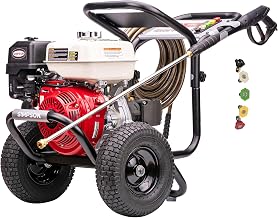
Choosing the best commercial pressure washer depends on your specific workload. For maximum cleaning power and endurance, the 15HP 4-Cycle Engine, Pressure Washer Gas Powered delivers a staggering 4400 PSI and 4.5 GPM with a triplex pump, making it ideal for contractors and fleet maintenance. If you prefer an electric option that still packs a punch for lighter commercial tasks, the Westinghouse ePX3500 Electric Pressure Washer offers reliable performance with anti-tipping technology and a pro-style wand. Both represent excellent value in their categories and will serve you well for years.
Frequently Asked Questions
What PSI do I need for commercial pressure washing? For most commercial tasks like cleaning driveways, parking lots, or building exteriors, aim for 3000 to 4000 PSI. Higher PSI is better for stripping paint or heavy grease. Electric models around 2500 PSI work for lighter jobs.
Is a gas or electric commercial pressure washer better? Gas models offer more power and portability, making them ideal for remote sites and heavy-duty use. Electric models are quieter, lighter, and require less maintenance, but they need a power outlet and have lower pressure. Choose based on your typical job site and cleaning intensity.
How often should I service a commercial pressure washer? Follow the engine manufacturer’s schedule: change oil every 50 hours for gas engines, inspect the pump oil level monthly, and clean or replace the air filter annually. For electric units, check the motor vents and hose connections regularly. Proper maintenance extends the life to many seasons.
Can I use a commercial pressure washer for residential cleaning? Absolutely, but be cautious: the high pressure can damage wood siding, soft roofs, or delicate surfaces. Use a wide-angle nozzle (40 degrees or higher) and keep the wand moving. Many commercial models include adjustable nozzles for safer cleaning. For more tips, see our Pressure Washers guide.


Write Your Review
No reviews yet. Be the first to share your experience!