

You have a massive cleaning job ahead: a grimy driveway, years of mildew on the patio, or a fleet of equipment that needs a deep scrub. A direct drive pressure washer might get the job done, but if you want reliability that lasts season after season, a belt drive pressure washer is the smarter investment. In this guide, we break down the best belt drive pressure washers on the market in 2026, focusing on models that combine high flow rates, commercial-grade pumps, and engines built to handle heavy use. Whether you are a homeowner tackling tough stains or a contractor needing daily dependability, we have you covered.
For more on choosing the right outdoor power equipment, check out our Pressure Washers category page for additional resources.


Buying Guide: What to Look for in a Belt Drive Pressure Washer
Engine Power and Pump Type
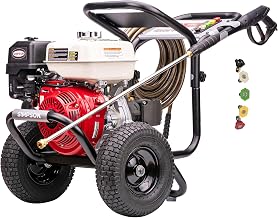
The heart of any belt drive pressure washer is the engine and pump combination. Belt drive systems separate the engine from the pump, allowing the engine to run at optimal RPM while the pump operates at a lower speed. This reduces wear and extends pump life. Look for Honda or CRX engines paired with triplex pumps (ceramic or AAA) for the best durability. The Simpson SuperPro SRC4440111, for example, uses a CRX 420 engine with an AAA triplex pump, delivering 4400 PSI at 4.0 GPM.
If you are comparing zero turn mowers and pressure washers for property maintenance, our how to choose a zero turn mower guide covers similar engine considerations.
Pressure and Flow Rate (PSI & GPM)
PSI determines cleaning force, while GPM dictates how fast you can rinse. For residential tasks like washing cars or decks, 3000–3500 PSI at 2.5–3.0 GPM is sufficient. For commercial use, you want 4000+ PSI and at least 4.0 GPM. The Simpson ALH4240 offers 4200 PSI and 4.0 GPM, making it ideal for heavy-duty jobs. The Canpump Belt Drive High Flow model trades pressure for volume: 1900 PSI but a massive 9.2 GPM, perfect for soft washing or large surface rinsing.
Build Quality and Portability
A belt drive pressure washer is a long-term investment. Look for an aluminum frame (like the Simpson ALH4240) or a roll-cage design (Simpson SuperPro) to protect components during transport. A 50-foot hose saves you from constantly moving the machine. If you need to maneuver on job sites, consider a model with large pneumatic wheels and a sturdy handle. The Simpson PS3228 PowerShot is lighter and more portable for homeowners.
Deck size comparisons for mowers can help you plan your property equipment purchases: see our 48 vs 54 inch zero turn mower and 54 vs 60 inch zero turn mower articles.
Maintenance and Serviceability
Belt drive systems require occasional belt replacement, but they are far easier to service than direct drive units. Look for models with external unloaders (like the Canpump) and easily accessible oil fill ports. The General Pump pressure washer pump is a standalone upgrade if you want to build your own system. Always check that replacement parts are readily available.
Final Thoughts
After evaluating the top belt drive pressure washers, our recommendation splits between two use cases. For homeowners who need a reliable, powerful machine without breaking the bank, the SIMPSON Cleaning PS3228 PowerShot 3300 PSI Gas offers Honda power and a solid MorFlex hose at a reasonable price. For professionals or serious property owners who demand maximum flow and durability, the Gas Power Washer For Professionals. CAT Triplex Pump, 50′ Hose, Aluminum Frame, 5 Nozzles. 49-State Compliant. ALH4240 Simpson Aluminum Series 4200 PSI Gas Pressure Washer, 4.0 GPM, Honda GX390 delivers commercial-grade performance with a belt drive system that will keep you cleaning for years. Both models are 49-state compliant and backed by strong reviews.
Frequently Asked Questions
What is the advantage of a belt drive pressure washer over direct drive?
Belt drive systems isolate the pump from the engine, allowing the engine to run at higher RPM while the pump operates at a lower, more efficient speed. This reduces pump wear, lowers noise, and extends the life of the pressure washer. Direct drive units are cheaper but typically have shorter pump lifespans.
How much PSI do I need for a belt drive pressure washer?
For typical home use like cleaning driveways, patios, and vehicles, 3000–3500 PSI is adequate. For commercial or heavy-duty tasks such as stripping paint or cleaning large equipment, look for 4000 PSI or more. Flow rate (GPM) is equally important; higher GPM speeds up rinsing.
Are belt drive pressure washers worth the extra cost?
Yes, if you plan to use the pressure washer frequently or for demanding jobs. The belt drive design typically doubles the pump lifespan compared to direct drive models. The initial investment pays off in fewer repairs and replacements over time. For occasional light use, a direct drive may suffice.
Can I use a belt drive pressure washer for soft washing?
Absolutely. Many belt drive models, especially high-flow units like the Canpump at 9.2 GPM, are excellent for soft washing because they deliver high volume at lower pressure. You can also adjust the unloader or use a downstream injector for chemical application. For more on choosing equipment, see our zero turn mower buying guide for similar maintenance considerations.




Write Your Review
No reviews yet. Be the first to share your experience!