

You love your home, but when a foot of snow piles up on the driveway, you’d rather not spend hours wrestling with a heavy, gas-guzzling machine. For occasional snow clearing, you need a blower that’s easy to start, simple to store, and powerful enough to handle the typical winter storm. That’s where the best snow blower for occasional use comes in. We’ve evaluated a range of cordless and electric models that are perfect for homeowners who face light to moderate snowfall a few times each season. This guide will walk you through the top contenders, what to look for, and how to choose one that fits your needs without breaking the bank or your back.
Whether you’re clearing a short driveway, a porch, or a sidewalk, these compact machines pack surprising punch. They eliminate the hassle of fuel mixing, pull cords, and engine maintenance. You just press a button or pull a trigger and start snow removal. To help you decide, we’ve also included insights from our coverage of snow blowers for landscapers to show how professional-grade features can benefit homeowners too.


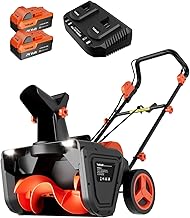


How to Choose the Best Snow Blower for Occasional Use
Power Source: Corded vs. Cordless
For occasional use, both corded and cordless snow blowers have their perks. Corded models like the Westinghouse WSnow20 Corded Snow Blower 20 Inch offer unlimited runtime as long as you have an outlet nearby. They’re typically lighter and more affordable. Cordless models, on the other hand, give you freedom of movement without a leash. Models like the 20 in Width, 12 in Depth, up to 25 ft Throw run on rechargeable batteries, so you can clear areas far from your home. If you have a smaller property and a convenient outdoor outlet, corded might be all you need. For flexibility and ease, cordless wins.
Clearing Width and Depth
How much snow you can move in one pass depends on the clearing width and intake depth. For typical driveways and sidewalks, a 20-inch clearing width is plenty. It lets you cover a standard two-car driveway in a few passes. Deeper intake depths like 12 inches or more can scoop up heavy, wet snow without stalling. The WORXBrushless Motor; 20″ Clearing Width features a 10-inch depth, while the SENIX1800W Brushless Motor, 12″ Depth goes up to 12 inches. Match these specs to the average snowfall you get. For larger areas, you might want to see what property managers rely on in our commercial snow blower guide.
Throw Distance and Chute Control
A snow blower that throws snow far away keeps your cleared path clean. Look for models with adjustable chutes so you can aim the snow exactly where you want it. The 20″ Clearing Width, 30ft Throwing Distance w offers a 30-foot throwing distance and a rotating chute, while the Greenworks 80V 12″ Brushless Snow Shovel gives you directional vane control for tight spaces. For occasional use, a throw distance of 20 to 30 feet is more than sufficient. When dealing with wet snow, a self-propelled model can offer better traction, as we explain in our guide for wet snow.
Maintenance and Storage
One of the biggest advantages of electric and battery-powered snow blowers is minimal upkeep. No oil changes, spark plugs, or fuel stabilizers. They start instantly with a push of a button. Many models, like the 20 in Width, 12 in Depth, up to 25 ft Throw, feature foldable handles for compact storage in a garage or closet. If you have limited space, consider a compact snow shovel style, such as the 13″ Wide, 8″ Deep Clearing with 19FT Throw. For more tips on handling heavy snow, check our guide on self-propelled snow blowers for heavy snow.
Final Thoughts
When you only need to clear snow a handful of times each winter, the best snow blower for occasional use should be simple, dependable, and easy to store. For most homeowners, we recommend the 20 in Width, 12 in Depth, up to 25 ft Throw for its cordless freedom and solid performance. If you prefer a plug-in option that never needs charging, the Westinghouse WSnow20 Corded Snow Blower 20 Inch is a reliable workhorse. Both will get you through winter without the hassle of gas or complex maintenance.
Frequently Asked Questions
What size snow blower do I need for occasional use?
For short driveways and walkways, a clearing width between 13 and 20 inches is ideal. A 20-inch model covers more ground per pass, while a 13-inch shovel-style blower is lighter and easier to maneuver in tight areas. Consider the average snowfall in your region to pick the right depth and throw distance.
Are cordless snow blowers powerful enough?
Modern brushless motors and high-voltage batteries, like those in the 40V and 80V systems, can handle most residential snowfalls. They throw snow up to 30 feet and clear down to the pavement. In 2026, battery technology has improved significantly, so you can expect dependable performance for a few storms each season.
How do I maintain a snow blower that I rarely use?
Electric and cordless models require very little maintenance. Keep the battery charged if it’s cordless, and store the unit in a dry place. For corded models, just check the cord for damage and keep the auger clear of debris. Regularly inspect the belts and chute to ensure smooth operation.
Can I use a snow blower on a gravel driveway?
Yes, but you need to be careful. Set the skid shoes so the auger doesn’t pick up loose gravel. Many blowers have adjustable heights to prevent stones from being thrown. A cordless model with a brushless motor gives you more control at variable speeds. For long driveways, a self-propelled unit might be easier to manage, as we detail in our long driveway guide.


Write Your Review
No reviews yet. Be the first to share your experience!