

Your driveway may only hold two cars, but when the snow starts piling up, that narrow strip still demands hours of shoveling. A full-size two-stage snow blower is overkill, and a basic shovel is too slow. The answer is a compact snow blower built for small driveways.
We’ve reviewed the most practical corded and cordless models on the market, focusing on clearing width, throw distance, battery life, and ease of storage. Our goal is to help you find a machine that starts quickly, maneuvers through tight spaces, and tucks away in a corner of the garage.
If you’re still deciding between power sources, our guide to the best cordless snow blower for small yards breaks down exactly what you can expect from battery-powered equipment in 2026.
Here is the complete lineup we compared:


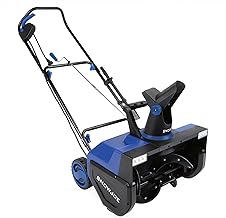

How to Choose the Right Snow Blower for a Small Driveway
Compact snow blowers may look simple, but the differences between models can affect how quickly you finish the job. Keep four key criteria in mind while you shop.
Clearing Width and Intake Depth
Compact blowers for small driveways typically offer a clearing width between 12 and 21 inches. A 12-inch model, like the Garvee 12″ Snow Blower, is best for paths and tight corners, while a 13-inch cordless shovel, such as the VOLTASK Cordless Snow Shovel, works well on steps and narrow walkways. At the other end, a 20-inch or 21-inch unit like the Westinghouse WSnow20 or the EGO Power+ SNT2122 clears a two-car pad in far fewer passes.
Intake depth matters too. Deeper intakes let the auger grab more snow with each pass, reducing the number of times you need to walk the machine. Look for a steel auger on heavier models; it chews through icy, crusty snow better than a plastic component.
Corded, Cordless, or Battery Power
Your choice of power source affects runtime, weight, and convenience. Corded electric snow blowers, such as the Steelite 20 Inch and the Westinghouse WSnow20, give you constant power without battery anxiety. The trade-off is the cord itself, which can tangle in tight driveways and limits your reach from an outlet.
Cordless snow blowers free you from that leash. Models like the ETOOLAB 40V 20-inch, SENIX 40V 18-inch, and VOLTASK 48V 16-inch run on removable batteries, letting you swap packs for extended runtime. Brushless motors, now standard on most premium cordless units, use energy more efficiently and last longer than brushed motors. In 2026, we recommend a cordless unit for most homeowners who want to avoid extension cords.
Battery voltage and capacity vary widely, from the modest 20V setup on entry-level shovels to the powerful 40V and 48V systems on full-fledged snow blowers. Always check how many batteries are included and what charger ships in the box. For more insight, read our roundup of the best cordless snow blower for homeowners.
Throwing Distance and Chute Control
A snow blower for a small driveway doesn’t need massive reach, but a 20-to-30-foot throw keeps snow from banking against your garage door or across the sidewalk. The SENIX33′ Max Throwing Distance is a standout in this category, and the ETOOLAB 20-inch model can send snow up to 25 feet.
Chute control is just as important. Look for a rotating chute or a directional plate that lets you aim snow exactly where you want it. A 180-degree rotation, like the one on the ETOOLAB, is ideal for avoiding obstacles. The VOLTASK snow shovels use a simple directional plate that works surprisingly well for a 13-inch machine.
Build Quality and Convenience Features
Lightweight construction matters when you’re pushing a machine for 20 minutes. Many compact snow blowers weigh under 30 pounds, and foldable handles make storage possible in tight spaces. The EGO Power+ 12″ Electric Snow Shovel is a great example of a minimal, easy-to-store design, while the EGO Power+ SNT2122 adds wheels and a more substantial frame.
LED lights are a nice bonus for early-morning or evening clearing. Wheels help on longer or sloped driveways, reducing the effort required to keep the auger engaged. If you’re new to powered snow removal, our guide to the best cordless snow blower for beginners can walk you through the basics.
If your driveway is made of pavers or a delicate surface, read our tips on the best cordless snow blower for paver driveways before you commit to a heavy unit.
Final Thoughts
For most compact driveways, we recommend the EGO Power+ SNT2122 21″ Single-Stage Snow Blower: it pairs a wide clearing path with strong battery performance and excellent build quality. If you want to save space and clear narrow paths on a budget, the VOLTASK Cordless Snow Shovel, 24V | 13-Inch is a dependable, lightweight choice. Both models excel on short concrete or asphalt driveways, and each one is backed by a rechargeable battery system that grows with your outdoor power tool collection.
Frequently Asked Questions
What size snow blower is best for a small driveway?
For a one- or two-car driveway, look for a clearing width between 13 and 21 inches. A compact snow shovel, like the VOLTASK Cordless Snow Shovel or the Garvee 12″, handles walkways and tight corners well, while a 20-inch model clears a small driveway in fewer passes. Measure your driveway before buying to avoid overspending on width you won’t use.
Are battery snow blowers powerful enough for a small driveway?
Yes, especially in 2026. Modern cordless blowers with 40V or 48V platforms handle wet snow up to 8 inches deep on a compact driveway. Just check that the kit includes at least one 4.0Ah battery, and preferably two, so you can clear the full pad before recharging.
Corded or cordless for a short driveway?
If you have an outdoor outlet within reach and don’t mind managing a cord, a corded model like the Steelite or the Westinghouse gives you unlimited runtime and costs less upfront. If your outlet is far away or you want freedom of movement, choose a cordless blower with dual batteries. Our guide to the best cordless snow blower for light snow can help you decide.
How much snow can a single-stage snow blower handle?
Single-stage snow blowers are best for light to moderate snowfalls of 6 to 8 inches. They excel on paved driveways and won’t bog down the way they do on gravel or heavy drifts. For deeper storms, consider a two-stage machine, though that’s usually beyond the scope of a small driveway.


Write Your Review
No reviews yet. Be the first to share your experience!