

Imagine waking up to a foot of heavy, wet snow, only to find your old single-speed blower struggling to push through. You need a machine that lets you dial in the pace, slowing down for deep drifts and speeding up on light dustings. That is where a snow blower with variable speed makes all the difference. In this guide, we evaluate the top models on the market, from cordless convenience to gas-powered muscle, so you can pick the right one for your driveway and budget. Whether you are a homeowner or a property manager, these picks offer the control you need to work efficiently without straining the machine. If you are also exploring other options, check out our best self-propelled snow blower recommendations for more insights.


Buying Guide: What to Look for in a Variable Speed Snow Blower
Clearing Width and Intake Depth
The width of the auger determines how many passes you need to clear a path. For most residential driveways, a 20- to 24-inch clearing width strikes a good balance between maneuverability and efficiency. Intake depth matters too: a deeper intake (around 10 inches or more) handles taller snow piles without clogging. Models like the WORXBrushless Motor with 20″ clearing width and the EGO Power+ SNT2120 with 21″ width are ideal for standard driveways, while the Ariens ST28DLE offers a 28-inch path for larger areas.
Variable Speed Control: Why It Matters
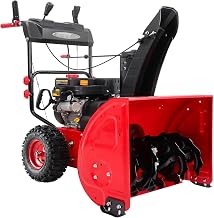
Variable speed lets you match the machine’s ground speed to the snow conditions. In deep, wet snow, a slower pace prevents the auger from bogging down and gives it time to throw snow farther. On packed or icy surfaces, a faster speed keeps you moving without losing traction. Look for models with a continuous speed dial or multiple forward speeds. The SENIX1800W Brushless Motor model includes variable-speed steel auger control, and the PowerSmart 24-Inch Gas Snow Blower offers six forward and two reverse speeds for precise adjustment.
Power Source: Cordless, Gas, or Corded
Your choice of power affects weight, run time, and maintenance. Cordless models (like the WORX and SENIX) run on batteries and are quiet and easy to start, but you need to monitor battery life. Gas models (such as the Poulan Pro PR241 and Ariens ST28DLE) deliver consistent power for long sessions and heavy snow, but require engine upkeep. Corded electric blowers offer unlimited run time but tether you to an outlet. For most homeowners, a quality cordless model with two batteries provides enough range for a typical driveway. If you need more muscle, explore our best commercial snow blower guide for heavy-duty options.
Build Quality and Extra Features
Durable construction, heated grips, LED lights, and remote chute control can make a big difference in comfort and usability. Steel augers and reinforced chutes resist damage from ice and gravel. Heated handles keep your hands warm during long sessions, and LED lights let you work early in the morning or after dark. The Poulan Pro PR241 comes with heated grips and a 210° remote chute, while the EGO Power+ 24″ Electric Snow Blower includes a self-propelled drive and a powerful brushless motor. For a deep dive into track-drive machines, see our best track drive snow blower roundup.
Final Thoughts
Choosing a snow blower with variable speed gives you the flexibility to handle whatever winter throws at you. For a lightweight, cordless option that excels on medium driveways, the SENIX1800W Brushless Motor, 12″ Depth delivers impressive performance with its variable-speed steel auger and included batteries. If you need raw power for long, heavy snowfalls, the Ariens ST28DLE Deluxe SHO 28 in. Two-Stage gas model offers exceptional throwing distance and durability. Both machines earned top marks in our evaluation for their speed control and build quality, so you can buy with confidence and spend more time enjoying the winter scenery.
Frequently Asked Questions
What does variable speed mean on a snow blower?
Variable speed allows you to adjust the ground speed of the machine independently of the auger speed. This lets you slow down for deep snow to prevent clogging, or speed up on light snow to finish faster. Most models use a dial or lever to change the drive speed continuously.
Is a variable speed snow blower worth the extra cost?
Yes, for most homeowners. The ability to match speed to conditions reduces strain on the engine or motor, extends battery life on cordless models, and gives you better control on uneven terrain. It is especially valuable if you deal with a mix of wet, heavy snow and light flurries. In 2026, many mid-range and premium models include variable speed as a standard feature.
How fast should a snow blower go?
There is no single ideal speed; it depends on snow depth and consistency. A good rule of thumb is to start in a lower gear or slower speed setting, then increase as you gauge the machine’s performance. Most variable speed models offer a range from about 1 to 4 mph, which is sufficient for residential use. For more tips, check out our best walk-behind snow blower guide.
Can I use a variable speed snow blower on gravel driveways?
Yes, but you need to be careful. Set the skid shoes to a higher position to keep the auger from scooping up gravel. A slower ground speed also helps minimize debris pickup. Some models, like the PowerSmart 24-Inch Gas Snow Blower, have adjustable skid shoes for this purpose. Always test on a small patch first.


Write Your Review
No reviews yet. Be the first to share your experience!