

As a landscaper, you know that clearing storm debris or prepping firewood for clients can eat into your day. A reliable log splitter turns a backbreaking chore into a fast, consistent task. In this guide, we review the best log splitter for landscapers in 2026, covering electric, gas, and manual models that balance power, portability, and durability. Whether you need a towable unit for large jobs or a compact electric splitter for tight spaces, we have you covered. For more on choosing the right equipment for your property, check out our log splitters category.
Safety note: Log splitters generate enough force to cause crushing injuries, and splitting can send wood fragments flying. Read the operator’s manual before use and wear safety glasses or goggles, work gloves, and steel-toe boots, plus hearing protection with gas models. Keep hands clear of the wedge and ram, let only one person load and operate the machine, and keep children, pets, and bystanders well away from the work area.


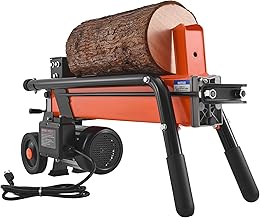


What to Look for in a Log Splitter for Landscaping
Tonnage and Power Source
The tonnage rating tells you how much force the splitter can apply. For landscapers who handle medium to large logs, 20 tons or more is ideal for hardwood. Electric models like the YARDMAX YS0650 6.5 Ton Electric Log Splitter are quiet and low-maintenance, perfect for residential jobs. Gas-powered units, such as the 20-Ton Gas Powered Log Splitter, offer mobility where electricity is unavailable. Consider the typical log size and job site conditions before choosing.
Portability and Build Quality
Landscapers move between properties, so a splitter with sturdy wheels and a compact frame saves time. Towable models like the BILT HARD 27-Ton Towable Gas Powered Log Splitter come with DOT tires and a ball coupler for easy towing. For smaller jobs, manual or electric splitters with built-in wheels are convenient. Look for full-beam steel construction to withstand repeated use. For more on equipment durability, read our fabricated vs stamped mower deck.
Cycle Speed and Log Capacity
A fast cycle speed keeps your crew productive. Electric splitters typically cycle in 12 to 18 seconds, while gas models with two-stage pumps can return in 8 seconds. Log length capacity matters too: most splitters handle up to 20 inches, but some accept longer pieces. The 20.5 in x 9.8 in Log Capacity model offers generous dimensions for oversized logs. Balance speed with power to match your typical workload.
Safety and Ease of Use
Look for features like two-hand operation, safety rings, and automatic return valves. Manual splitters like the Fixed splitting blade, Protective safety ring (Kindling Cracker) are inherently safe because they require no swinging. Electric models often have low noise levels and no fumes, making them suitable for residential areas. For more on choosing the right equipment, see our zero turn mower buying guide.
Final Thoughts
After evaluating the top contenders, we recommend the YARDMAX YS0650 6.5 Ton Electric Log Splitter for landscapers who need a quiet, low-maintenance machine for daily use, and the BILT HARD 27-Ton Towable Gas Powered Log Splitter for heavy-duty jobs requiring maximum power and mobility. Both offer outstanding value and reliability for professional landscaping, ensuring you can handle any firewood task efficiently.
Frequently Asked Questions
What size log splitter do I need for landscaping?
For most landscaping jobs, a splitter with 6 to 10 tons is sufficient for softwoods and small hardwoods. If you regularly split large oak or maple, consider a 20-ton gas model. Evaluate the average log diameter and volume you process each week to choose the right capacity in 2026.
Electric vs gas log splitter: which is better for landscapers?
Electric splitters are quieter, lighter, and require less maintenance, making them ideal for residential areas and small jobs. Gas splitters offer more power and portability for remote sites without electricity. Your choice depends on job site access and noise restrictions. For more on comparing equipment, read our zero turn mower vs robot mower.
How much maintenance does a log splitter require?
Electric splitters need little more than keeping the wedge clean and checking hydraulic fluid levels annually. Gas models require oil changes, spark plug checks, and fuel stabilization during storage. Both benefit from regular lubrication of moving parts. Always refer to the owner’s manual for specific intervals in 2026.
Can a log splitter handle hardwood?
Yes, most log splitters can handle hardwood like oak, hickory, and maple. The key is matching tonnage to log density: a 20-ton gas splitter will breeze through tough knots, while a 6-ton electric model may struggle with large, dense pieces. For consistent results, choose a splitter rated for the hardest wood you encounter. For engine comparisons, see kawasaki vs kohler mower engines.


Write Your Review
No reviews yet. Be the first to share your experience!