

You have a dirty driveway, a moss-covered patio, or years of grime on your siding. A gas pressure washer can blast that mess away in minutes, but finding the right one within a reasonable budget can feel overwhelming. This guide focuses on the best gas pressure washer under $700 in 2026, highlighting models that deliver real cleaning power without sacrificing reliability. Whether you are a homeowner tackling seasonal chores or a DIY enthusiast, we have you covered.
For more on choosing the right equipment for your property, check out our Pressure Washers category.




Buying Guide: What to Look For in a Gas Pressure Washer Under $700
PSI and GPM: The Power Combo
Pressure (PSI) and flow rate (GPM) determine how fast and effectively you can clean. For most home jobs like driveways, decks, and siding, a range of 2800 to 3600 PSI with at least 2.3 GPM is ideal. Higher numbers mean faster cleaning, but too much pressure can damage wood or soft surfaces. Look for models with adjustable nozzles to dial in the right force.
Engine Quality and Reliability
The engine is the heart of any gas pressure washer. Honda engines are widely regarded as the most reliable and durable, but other brands like Champion and Westinghouse also offer solid performance. A reliable engine means fewer startups issues and longer life. For a machine you will use for years, investing in a trusted engine brand pays off.
Build Quality and Portability
A steel frame with a powder-coated finish resists rust and handles rough use. Look for models with large wheels and a sturdy handle for easy movement across your yard. Some units include a hose reel or storage for nozzles, which keeps everything organized. A well-built machine will survive drops and bumps without breaking.
If you are also considering mowing equipment, our zero turn mower buying guide can help you choose the right deck size for your property.
Hose Length and Accessories
A longer hose (25 feet or more) reduces the need to move the machine constantly. MorFlex hoses are kink-resistant and easier to handle. Also check the included nozzles: a standard set of 5 quick-connect tips (0°, 15°, 25°, 40°, and soap) covers most cleaning tasks. Some models come with a surface cleaner attachment, which speeds up flat surface cleaning.
Final Thoughts
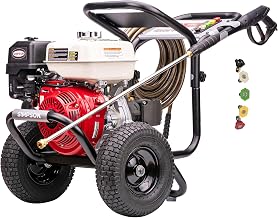
After evaluating the top contenders, we recommend the SIMPSON Cleaning PS3228 PowerShot 3300 PSI Gas for its proven Honda engine and robust build, ideal for heavy-duty use. For a more budget-friendly option that still delivers strong performance, the Westinghouse WPX3600 Gas Pressure Washer offers excellent power and an onboard soap tank for convenience. Both models sit comfortably under your budget and will keep your property looking pristine for years.
Frequently Asked Questions
What PSI do I need for a gas pressure washer?
For most home cleaning tasks like driveways, sidewalks, and house siding, 2800 to 3500 PSI is sufficient. Higher PSI cleans faster but can damage softer surfaces like wood if not used carefully. Always start with a wider spray pattern and narrow it as needed.
How long do gas pressure washers last?
With proper maintenance, a quality gas pressure washer can last 10 years or more. Regular oil changes, clean fuel, and winterizing the pump are key. Models with Honda engines often outlast others due to their reliability and available parts.
Can I use a gas pressure washer on a deck?
Yes, but you need to be careful. Use a wide-angle nozzle (40° or 25°) and keep the wand moving to avoid gouging the wood. A surface cleaner attachment is safer and more efficient for decks. Always try it on a small area first.
What is the difference between a gas and electric pressure washer?
Gas pressure washers offer higher PSI and GPM, making them better for large, tough cleaning jobs. They are portable and don’t need an outlet, but they are louder and require more maintenance. Electric models are quieter, lighter, and easier to store, but are limited by cord length and lower power. For heavy-duty use, gas is the way to go.
For more on maintaining your yard equipment, see our article on fabricated vs stamped mower deck.




Write Your Review
No reviews yet. Be the first to share your experience!